
𝗥𝗲𝘁𝗮𝗶𝗹 𝗔𝘀 𝗦𝗽𝗲𝗰𝘁𝗮𝗰𝗹𝗲
Retail in Real Time ● March 10

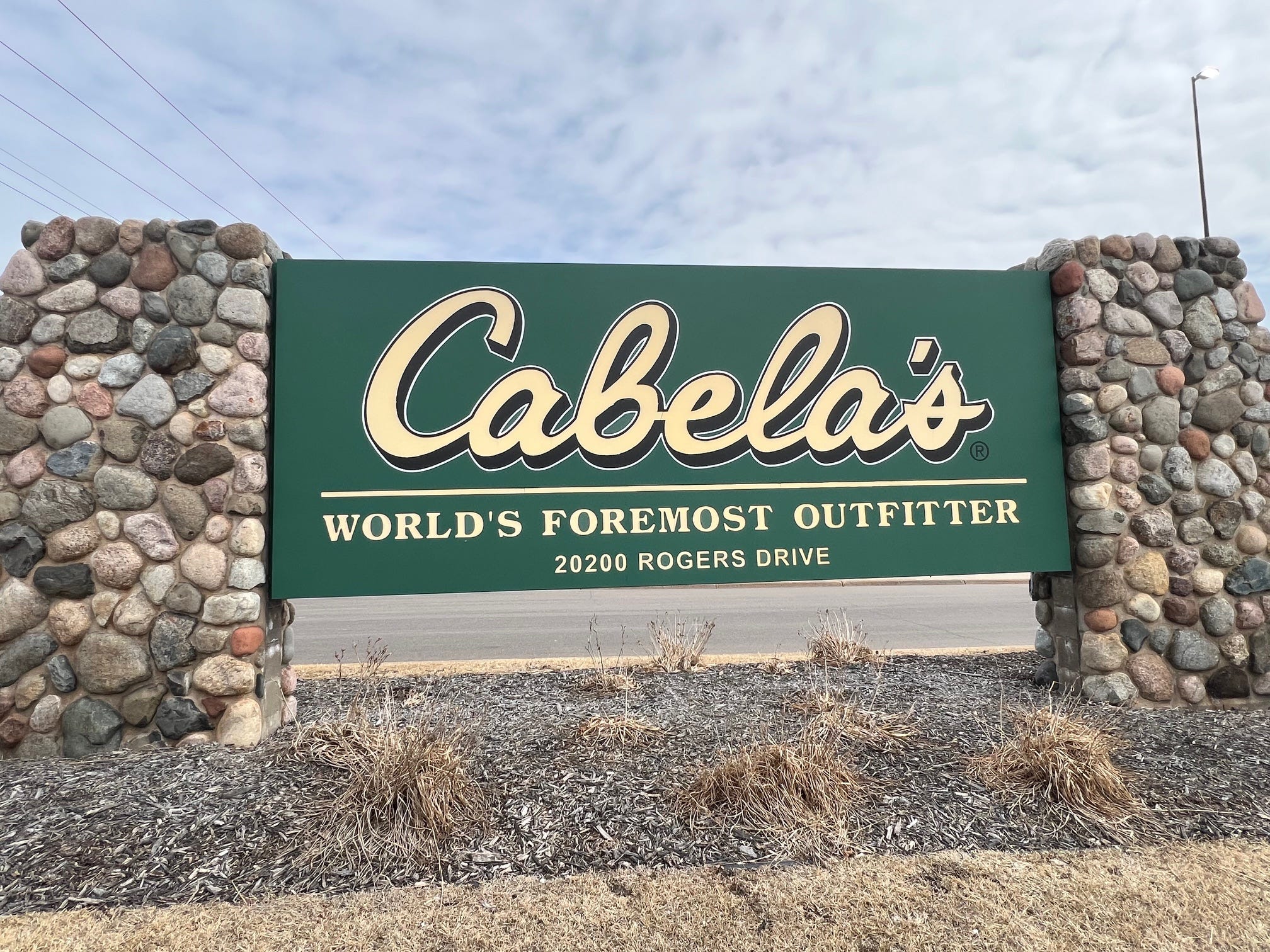
You don’t shop Cabela’s.
You experience it.
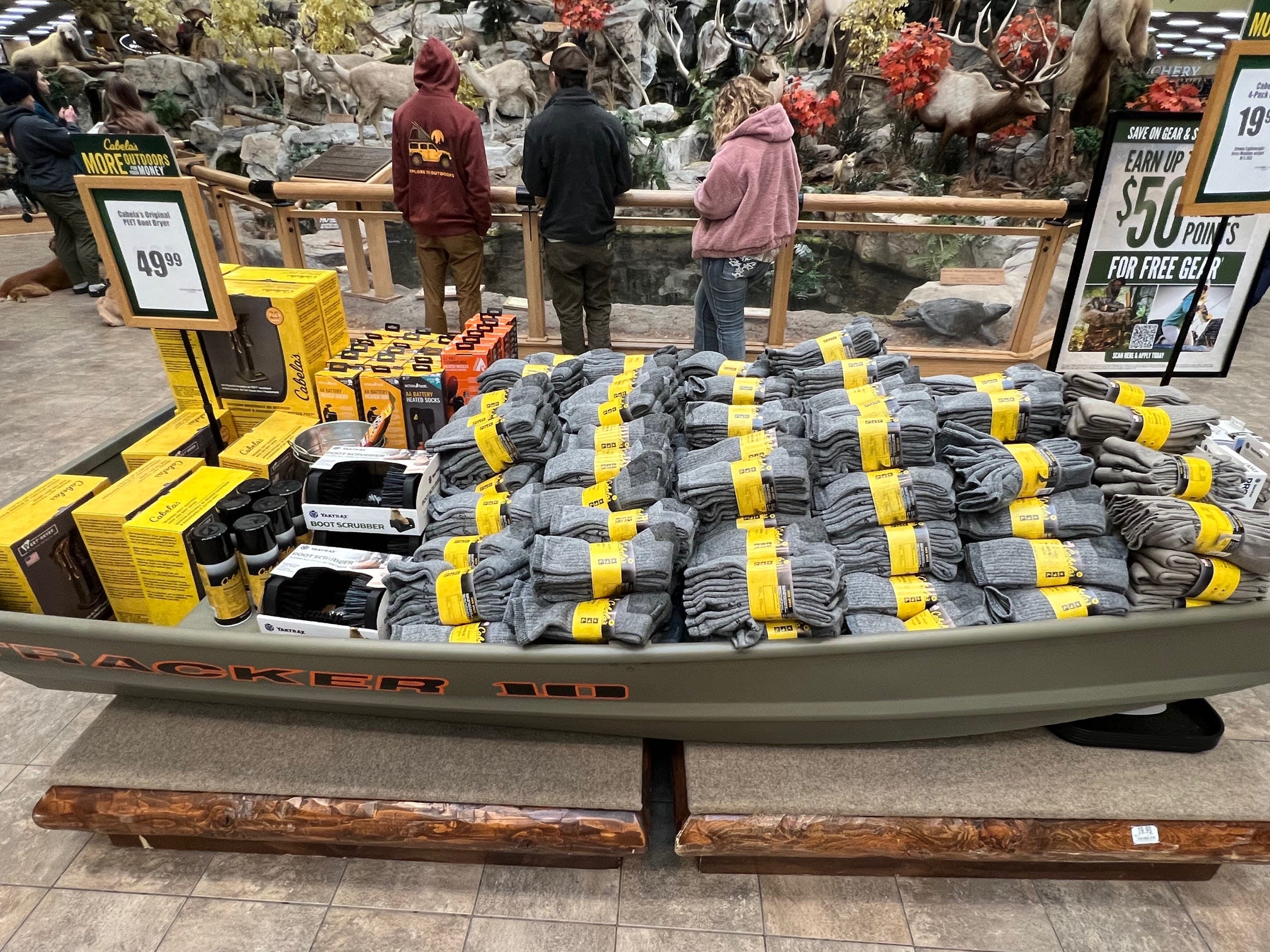
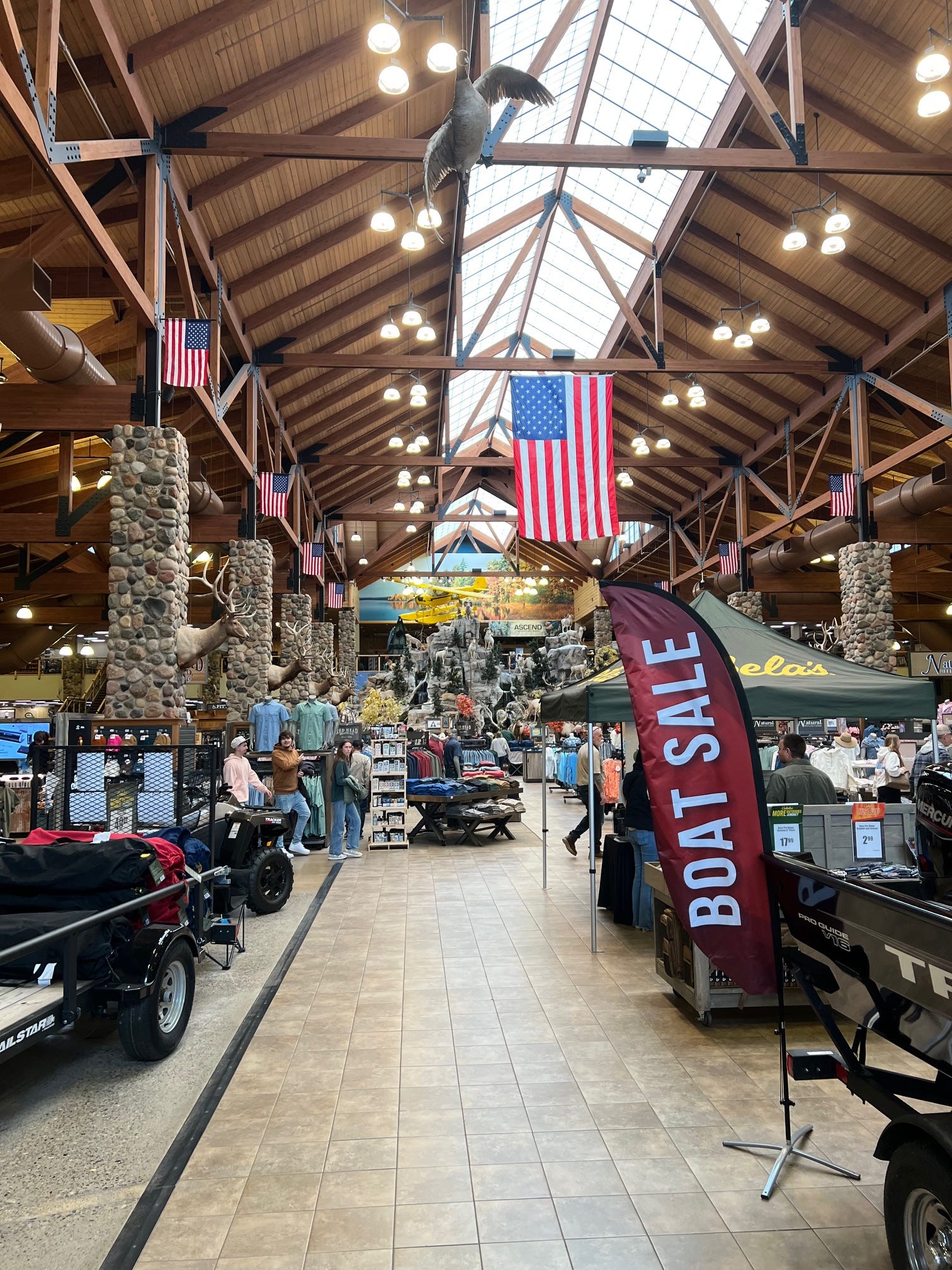
Walking into Cabela’s feels far more like stepping into an outdoor destination than entering a store. Timber trusses stretch overhead. Stone columns anchor the floor. A taxidermy mountain with flowing water rises through the center of the building.
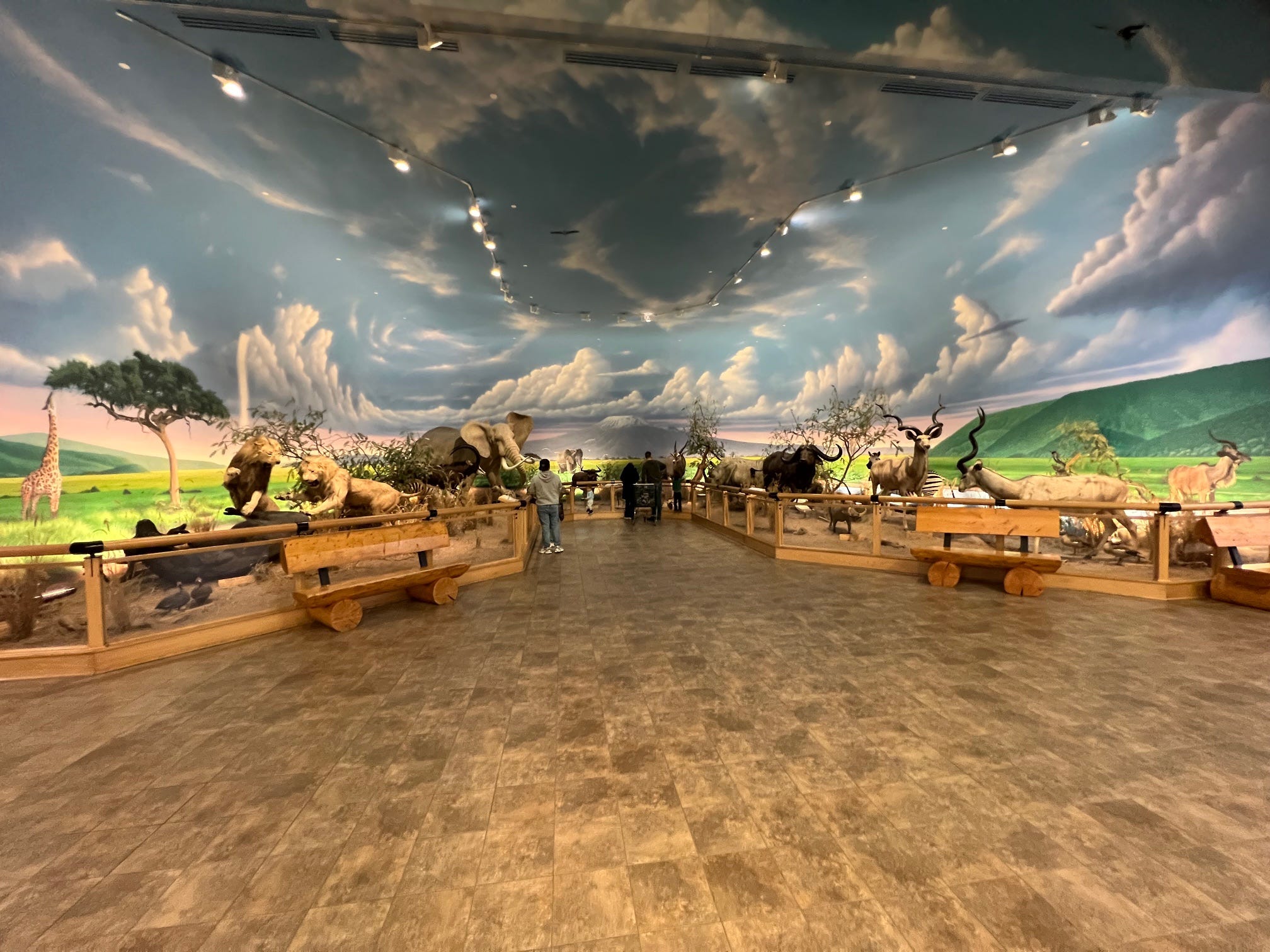
An aquarium, boats, bait shop, and expansive branded shops immediately turn the visit into something immersive.
This is not a quick transaction environment.
It is a retail experience designed to slow customers down and pull them deeper into the space.
A few details from the visit make clear why it works.
What I Saw
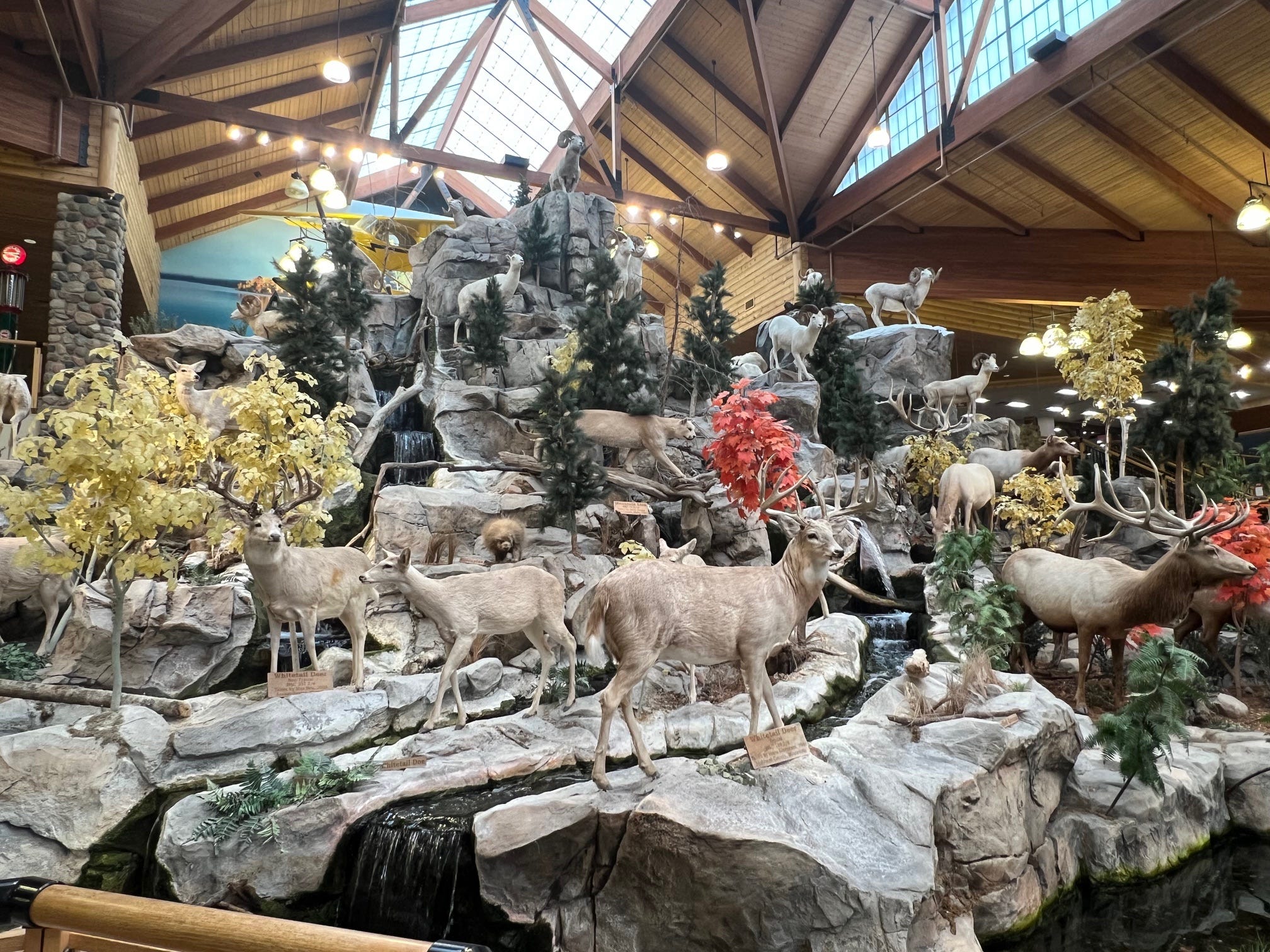
Hunting, fishing, boating, camping, apparel, and gear all live under one roof across two expansive stories. The scale is remarkable, but the merchandising discipline is what makes the environment work.
The Huk presentation sits smartly adjacent to the Bass Pro Shops fishing shop, connecting performance apparel directly to the activity it supports.
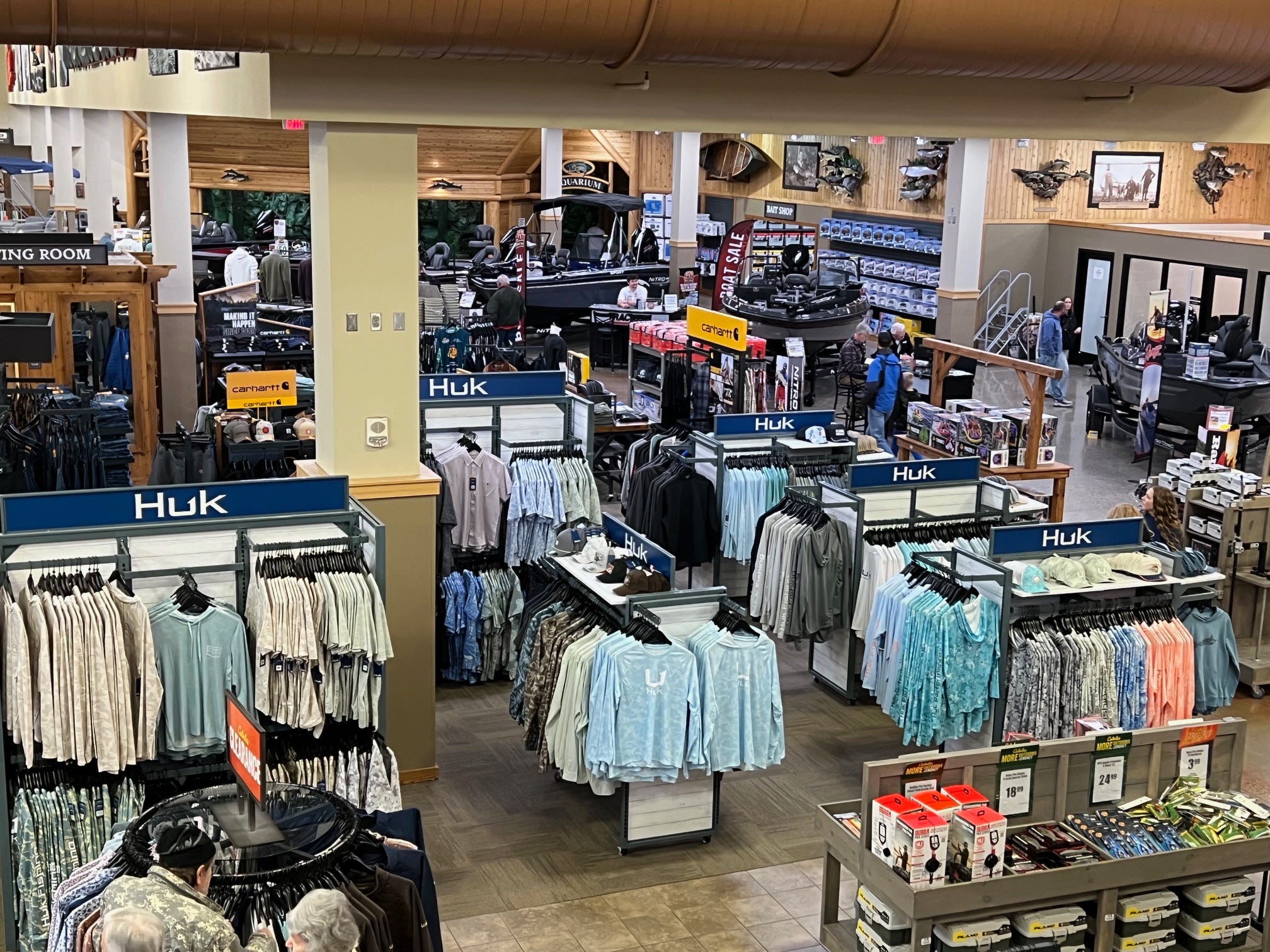
Nearby, a Tracker boat becomes a visual merchandising platform for adjacent products rather than simply a display prop.
The hunting blind fixture grounds the category in authentic context. Red Head Brand Co. and Natural Reflections feel like complete branded environments rather than racks dropped into a large store.
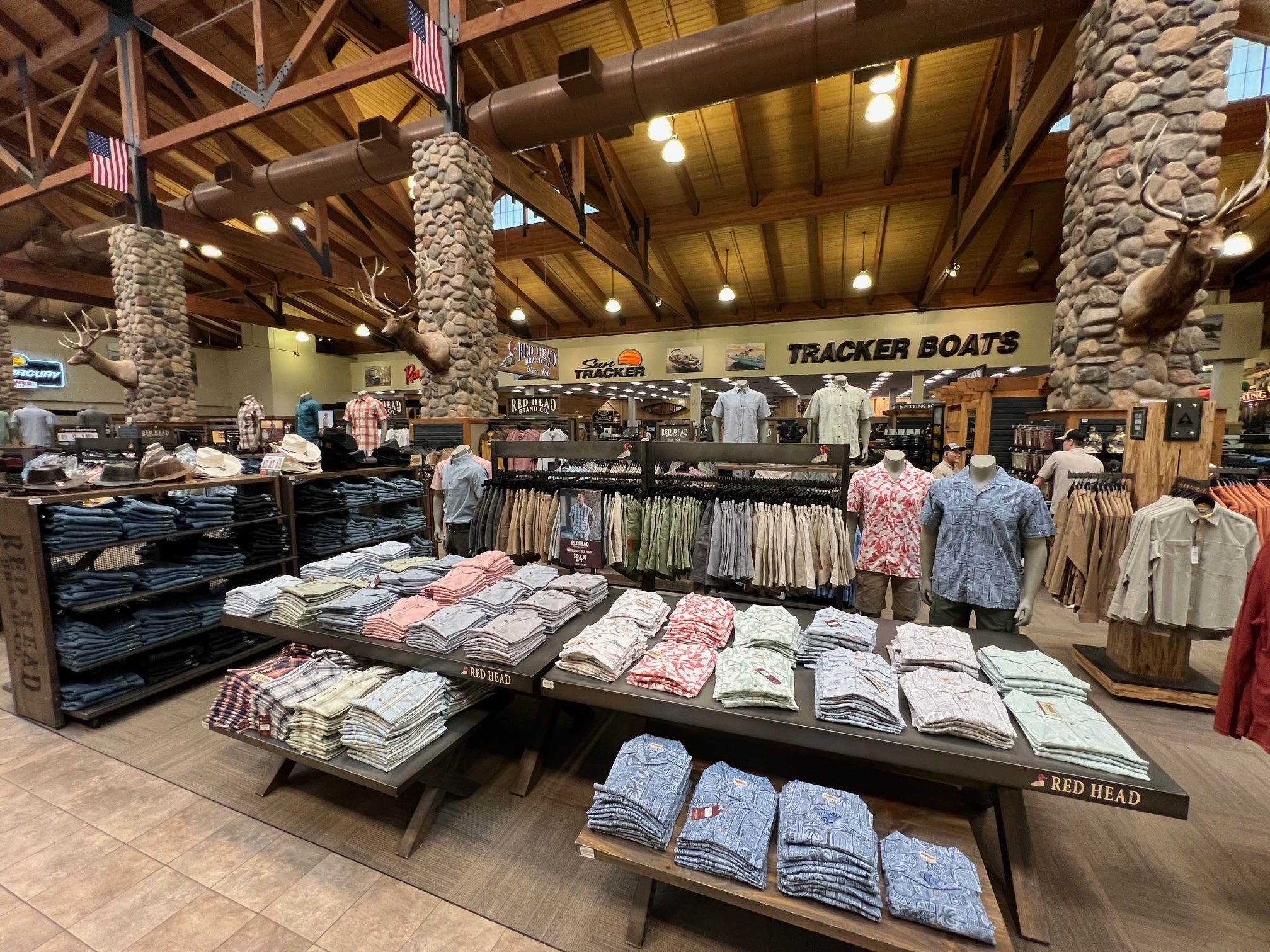
Store associates were visible everywhere helping customers, while kids were locked into the aquarium and the towering taxidermy mountain.
That matters.
Those environmental anchors give adults more time to browse, linger, and shop.
Why It Works
Cabela’s understands something many retailers forget.
Merchandise may be secondary to the outdoor narrative, but that is exactly why the store works so well.
Scale and theatricality do the heavy lifting.
The built environment establishes the story. Space planning supports the mission. Smart adjacencies make the assortment easier to shop. Visual merchandising transforms boats, blinds, and wildlife scenes into more than decoration.
They become selling tools.
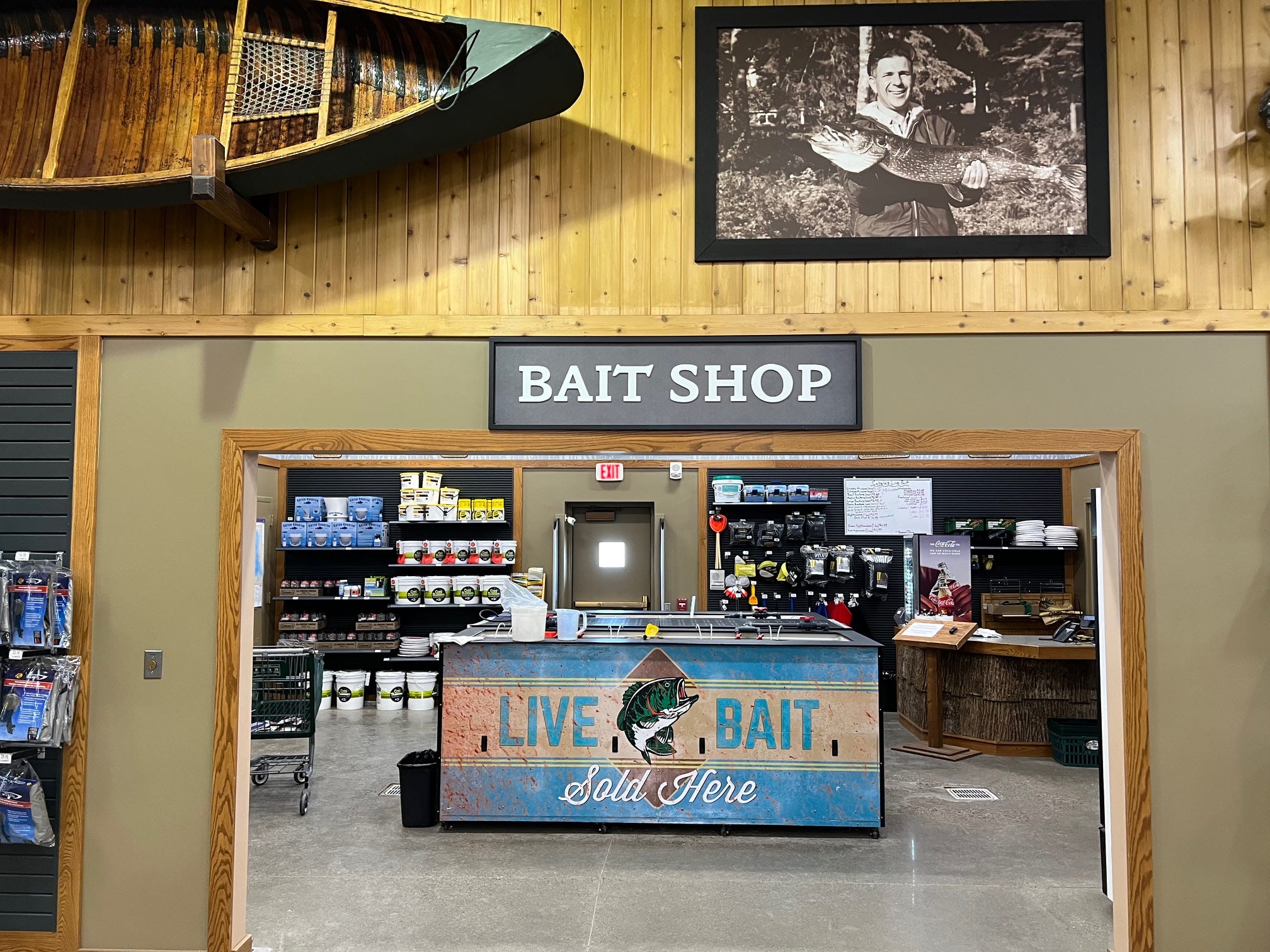
Operational details reinforce the experience as well. The live bait shop lets customers walk out ready to fish immediately.
A standing discount for military, law enforcement, firefighters, and wildlife agents deepens the brand relationship with core customers.
This place feels less like a store and more like an event.
And the buzz in the building reflects that.
What Other Retailers Can Learn
Retailers do not need a taxidermy mountain to learn from Cabela’s.
But they should pay attention to what this store gets right.
Environment creates permission to linger.
Adjacency makes broad assortments intuitive.
Visual merchandising turns props into productive selling tools.
Family engagement increases dwell time for everyone in the group.
Experience works best when it is not layered onto the store.
It has to be built into the format.
Closing Thought
Cabela’s proves that when a retailer fully commits to its world, the store stops feeling like a place to buy products and starts feeling like a place customers want to explore.
Retail like this always leaves me thinking about what other environments could learn from committing more fully to their own story.
How I Help
I help retailers translate brand strategy into store format, space planning, and visual merchandising decisions that make physical environments more memorable.