
Two Store Fixes Target Could Start Tomorrow
Retail in Real Time ● March 5

Target recently outlined its 2026 growth strategy during Investor Day in Minneapolis.
The priorities are clear.
Leading with merchandising authority.
Elevating the guest experience.
Investing $1B in operating improvements to deliver a more consistent store experience.
It is an ambitious and necessary strategy.
But guests will not experience the strategy first. They will experience the stores.
And during recent store visits, two opportunities stood out that could begin signaling visible progress almost immediately.
What I Saw
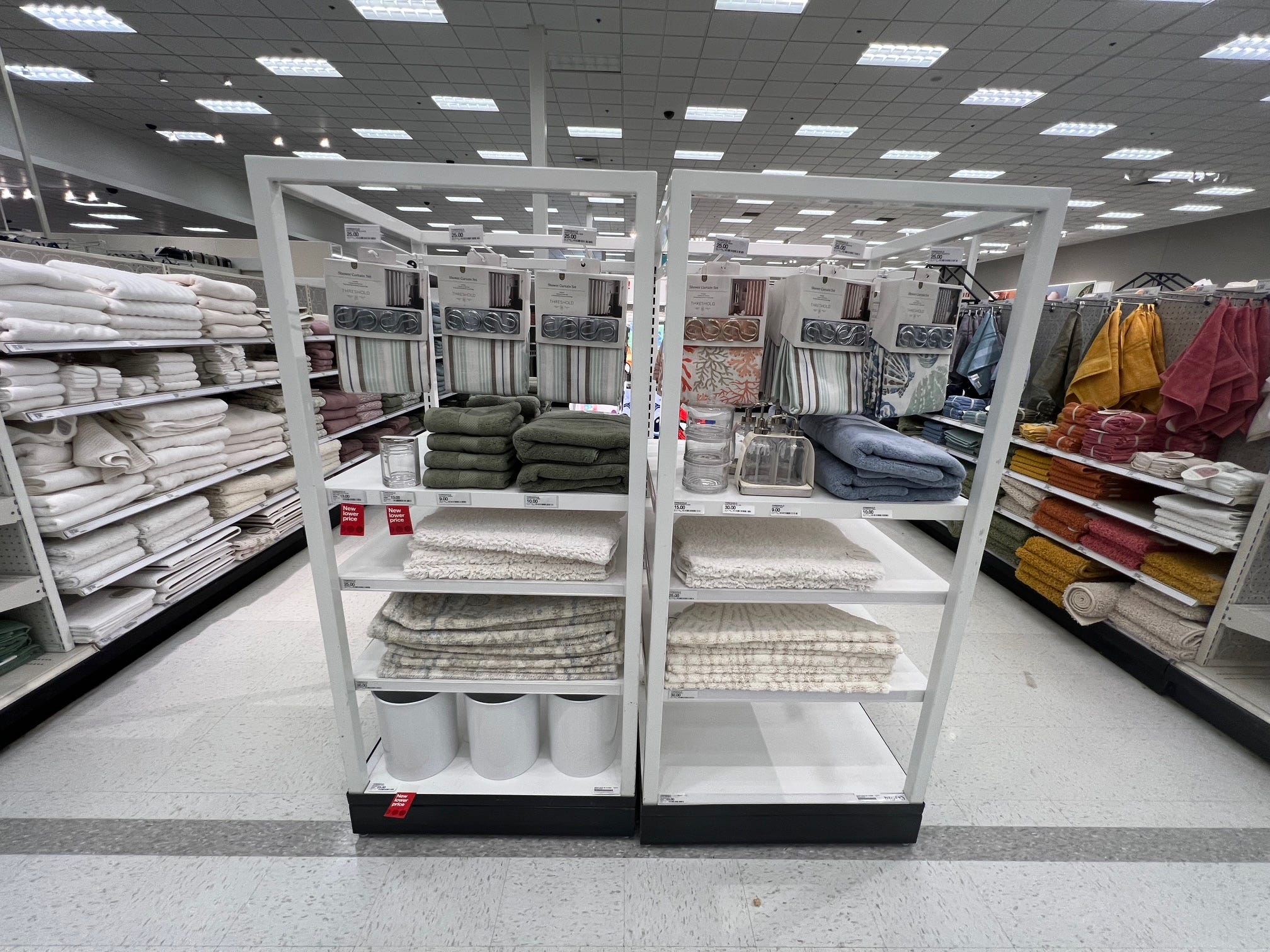
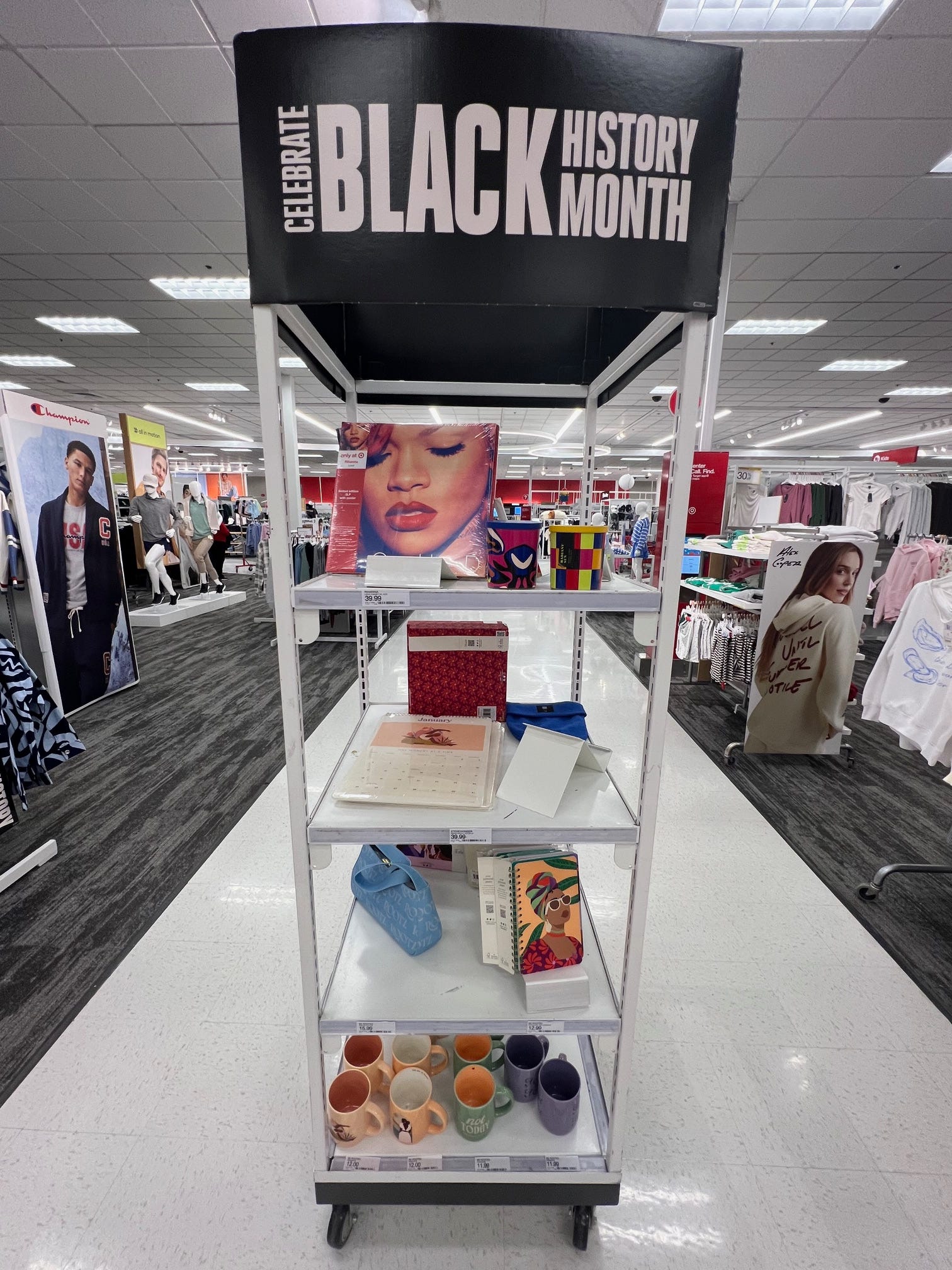
Across multiple stores, a series of small fixtures appear throughout main racetrack aisles and adjacent departments.
They are lightweight units designed to hold a small assortment of product while relying on decorative headers or minimal signage to tell the story.
In practice, the fixtures struggle to carry meaningful assortment depth.
Even when fully set, they appear thin. Once a few units sell through, the presentation quickly begins to look incomplete.
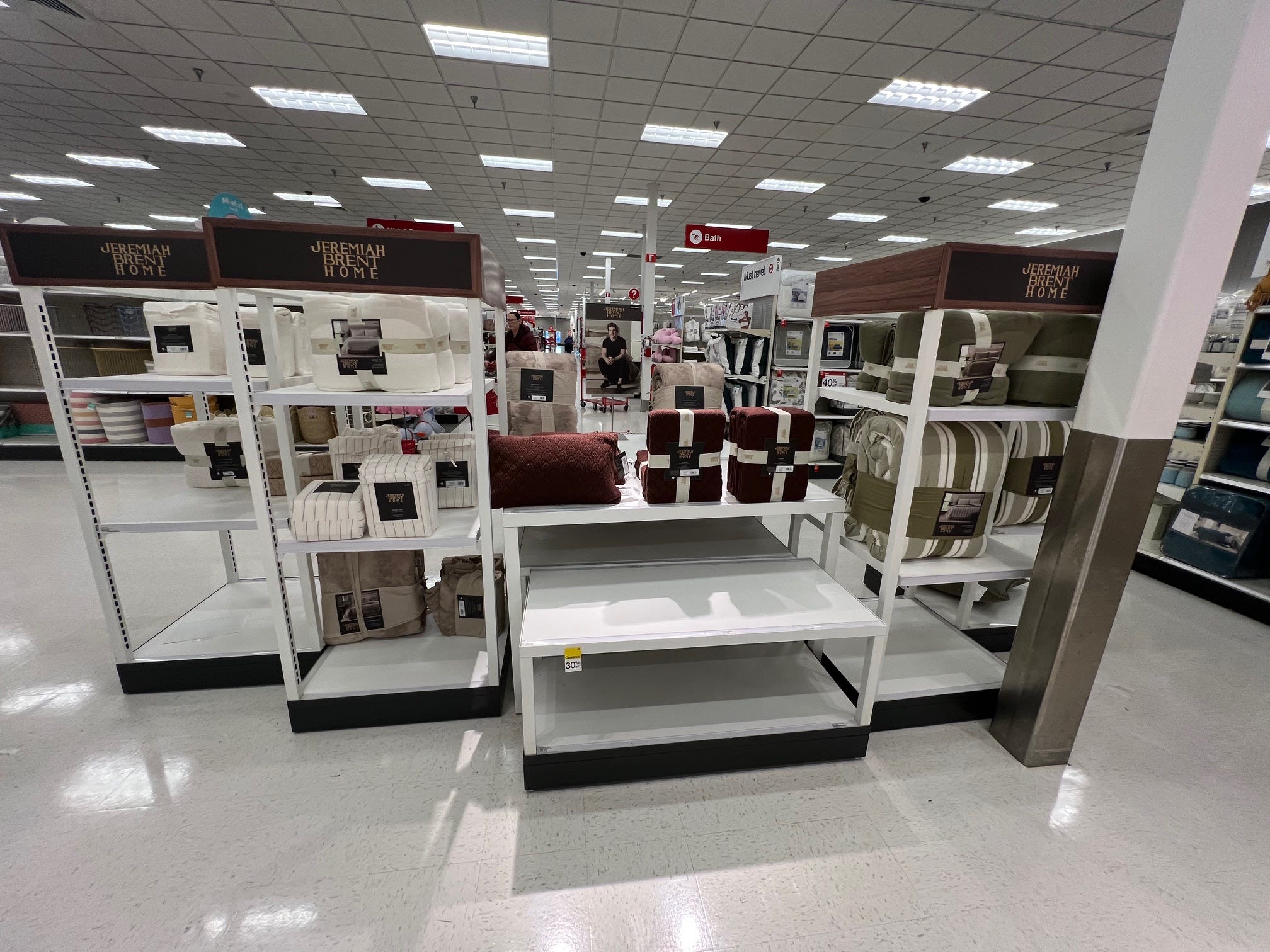
Several of these fixtures were being used to support the new Jeremiah Brent Design Home bedding launch.
The collection is announced as more than 80 SKUs, yet during store visits I rarely saw more than a dozen presented together.
Some of that may be distribution timing.
But the fixtures themselves limit how much product can be shown in a way that feels credible to the guest.
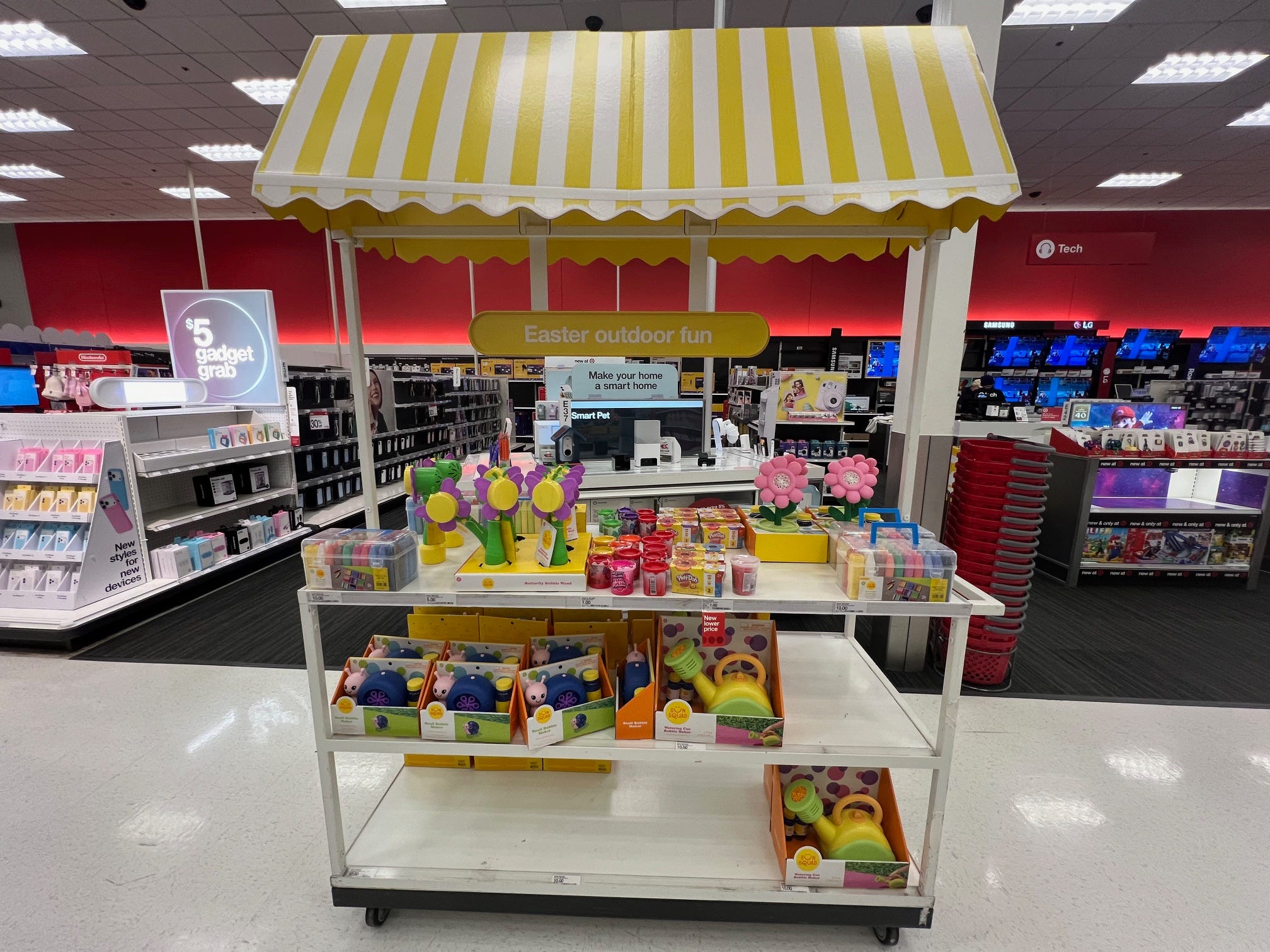
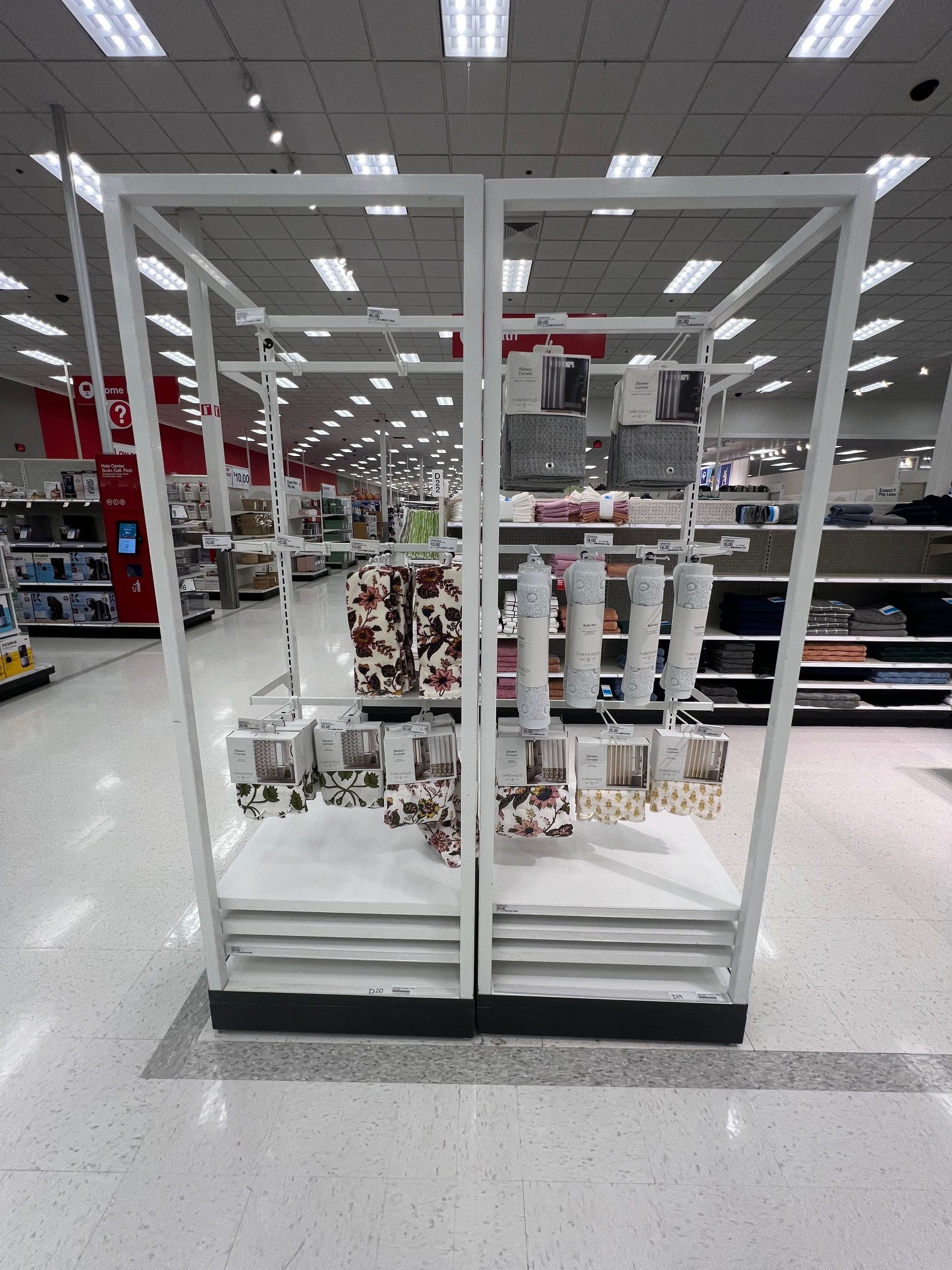
The issue is structural.
These fixtures simply cannot support the assortment depth required to tell a strong merchandising story.
What Stood Out
The second opportunity appears in apparel.
Target already has strong brand photography and well-styled mannequins positioned throughout the department.
Individually, both elements are effective.
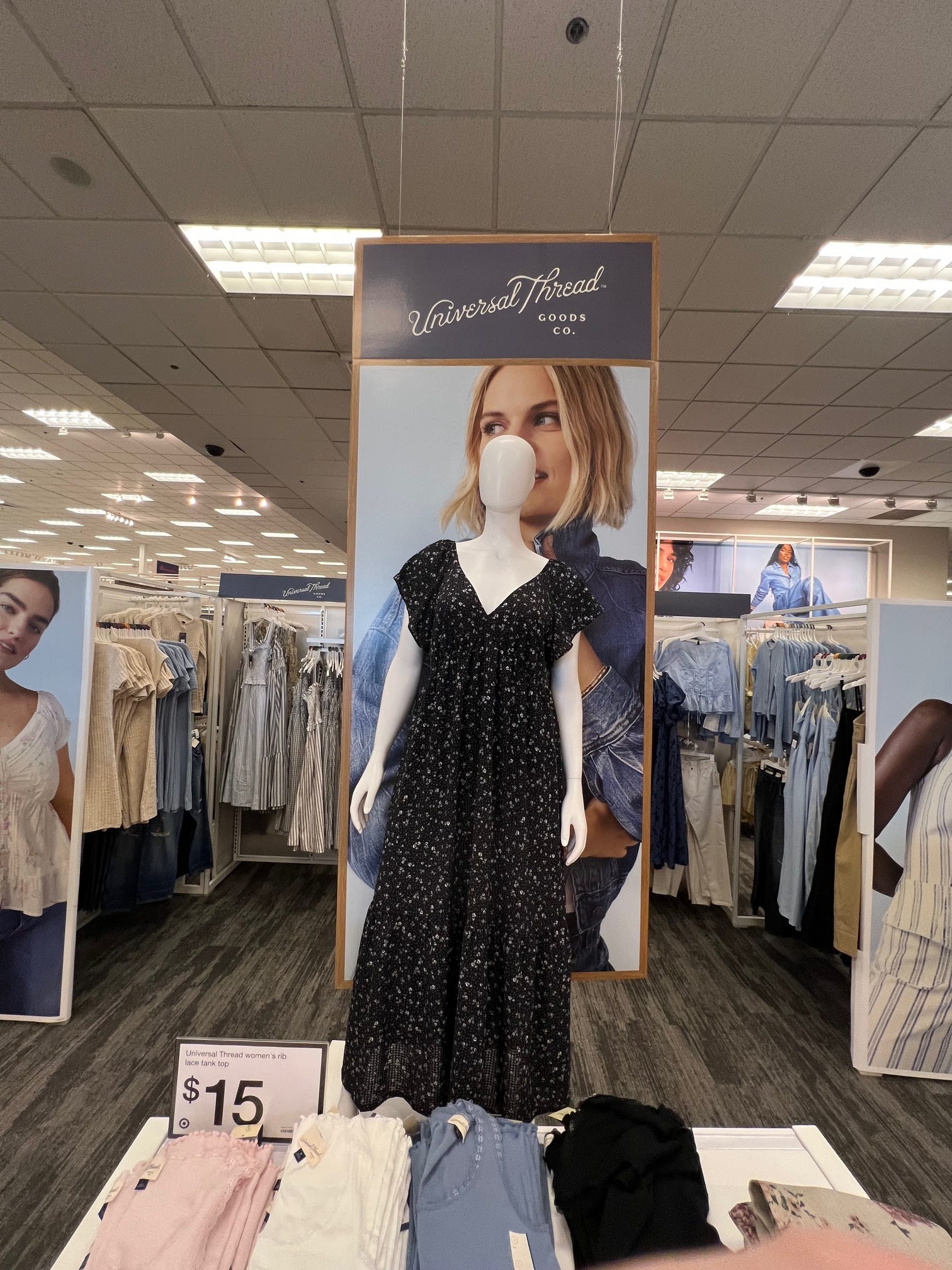
But they are frequently placed in ways that compete with each other.
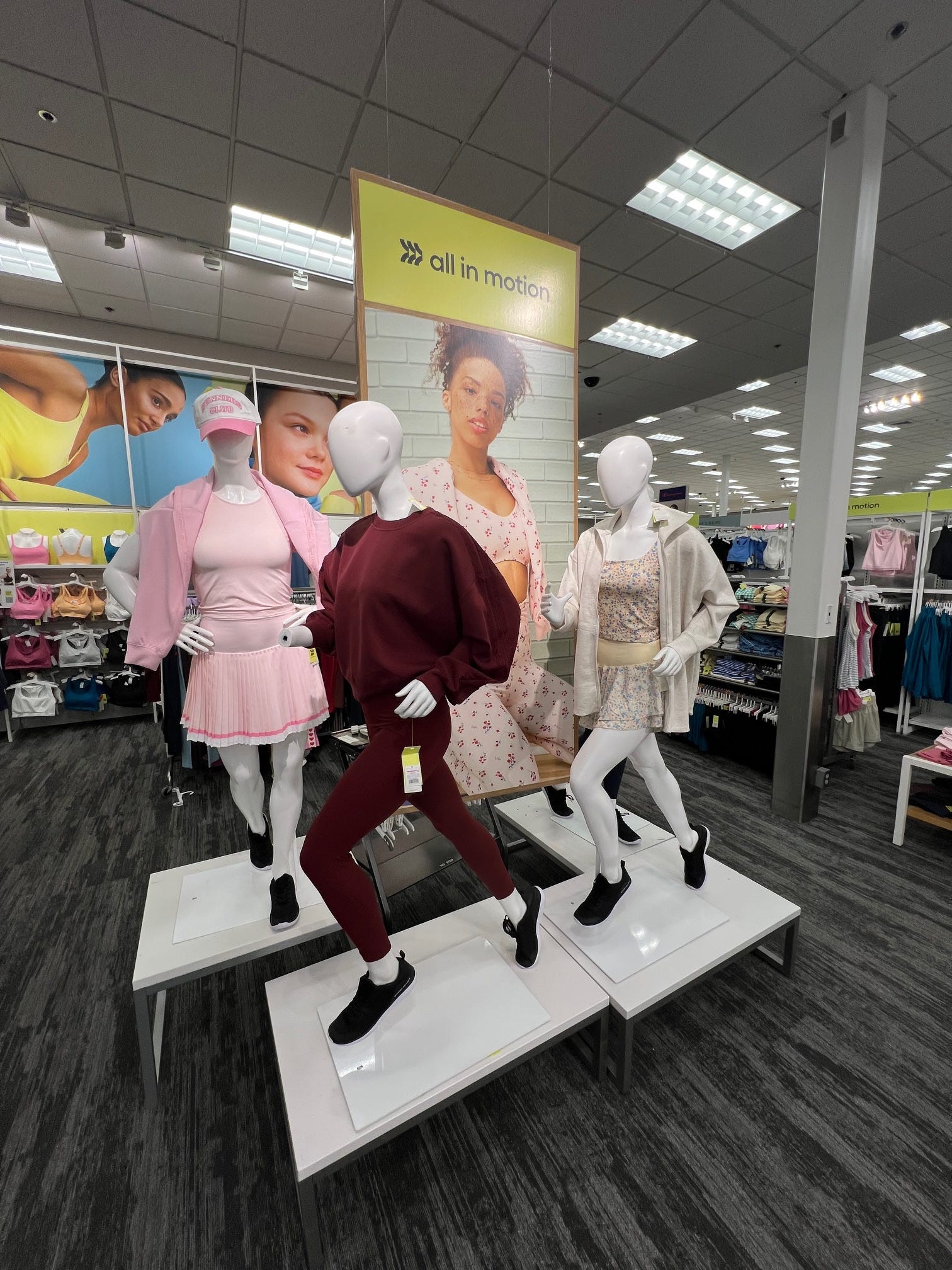
In many cases, mannequins are positioned directly in front of large photographic panels or directly behind apparel racks.
The result is predictable.
The mannequin blocks the graphic while the graphic overwhelms the mannequin.
Instead of reinforcing the brand story, the two elements compete for attention.
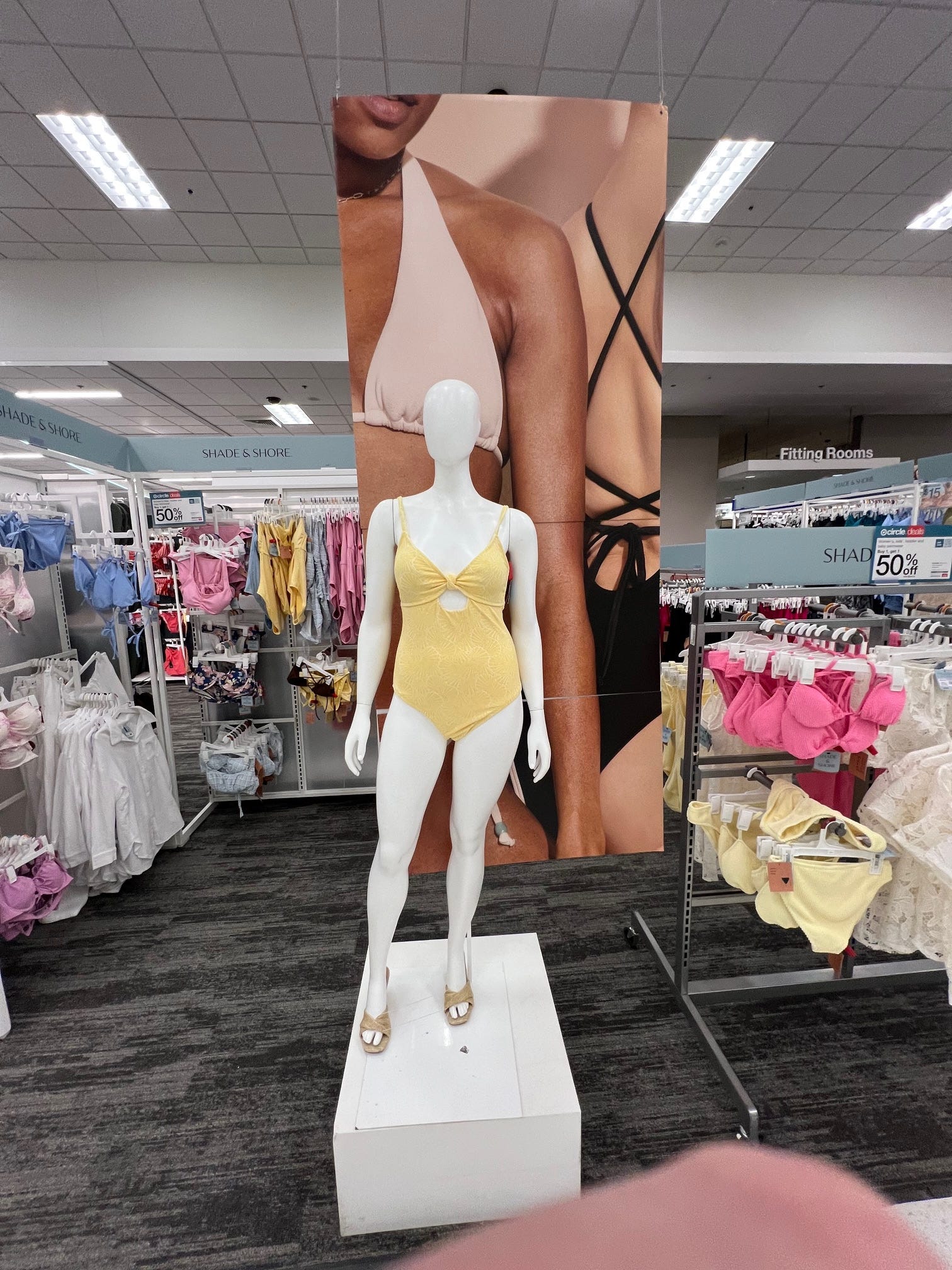
This is not a product problem.
It is a visual merchandising discipline issue.
Small adjustments in placement would allow both elements to work together and elevate the presentation.
Why This Matters
Target’s strategy emphasizes merchandising authority and a more elevated guest experience.
But guests experience stores through physical cues.
Fixtures that cannot support meaningful assortment weaken that authority.
Visual presentations that compete with themselves dilute storytelling.
Neither issue requires a multi-year transformation to address.
Both can be improved quickly through fixture discipline and stronger visual merchandising standards.
What Other Retailers Can Learn
Large-scale transformation strategies matter.
But so do the signals stores send today.
A few reminders worth keeping in mind:
• Fixtures must support the assortment depth needed to tell the story
• Racetrack presentations should reduce friction, not add clutter
• Visual storytelling elements should reinforce each other, not compete
• Small operational improvements can build guest trust quickly
Momentum in retail environments often starts with visible improvement.
Not just long-term strategy.
Closing Thought
Target’s long-term strategy is ambitious and necessary.
But visible progress matters.
Small improvements executed quickly can signal that change is underway, create momentum in stores, and begin rebuilding guest trust.
And when Target gets the in-store experience right, few retailers in America do it better.
How I Can Help
I help retailers translate strategy into store environments through store format design, space planning, and visual merchandising improvements that strengthen the customer experience.
This is awesome. Well done. I would also add that those fixtures are difficult for stores to manage as well, especially along the racetrack.
I agree, those mannequins in front of large photo displays look so disorganized, just no thought process.